
The Home Search Has Expanded Far Beyond the Local Market
Not long ago, the average homebuyer began their search by narrowing down a handful of neighborhoods. Maybe they wanted to be close to work, near a particular school district, or within a short commute of family. The search area was often measured in miles, not hundreds of miles.
That approach is changing.
In 2026, more buyers are expanding their search beyond city limits and county lines. Instead of comparing neighborhoods within one metropolitan area, they’re comparing entire states. A buyer who once focused exclusively on South Florida may now be weighing opportunities in North Carolina, Tennessee, or Texas. Someone living in California might be evaluating Arizona, Idaho, Nevada, and Florida before making a decision.
This isn’t just a temporary trend. It’s a reflection of how technology, remote work, affordability, and consumer expectations have reshaped the real estate market.
For real estate agents and brokers, understanding why buyers are broadening their search is becoming increasingly important. The professionals who recognize this shift can position themselves to serve a much larger audience and uncover opportunities that simply didn’t exist a decade ago.
Remote Work Has Removed Geographic Boundaries

One of the biggest reasons buyers are shopping entire states is that work no longer dictates where many people have to live.
The widespread adoption of remote and hybrid work has fundamentally changed the housing search process. Millions of professionals now have the flexibility to live almost anywhere, as long as they have a reliable internet connection and access to transportation when needed.
Instead of asking, “How close is this house to my office?” buyers are asking much different questions.
- Which state offers the best quality of life?
- Where can I stretch my housing budget the furthest?
- Which markets have the strongest long-term growth potential?
- How much will I save in taxes?
Suddenly, buyers who once had one market to consider may have ten. This expanded freedom has transformed the way consumers approach real estate, creating a new generation of buyers who think regionally instead of locally.
Affordability Is Driving Buyers Across State Lines

Housing affordability continues to be one of the biggest factors influencing where people choose to live. Many buyers who have been priced out of one market are discovering that neighboring states, or even states across the country, offer significantly more purchasing power. A family that can only afford a small condominium in one metropolitan area may be able to purchase a larger single-family home with a yard somewhere else. Others are discovering lower property taxes, reduced insurance costs, or a lower overall cost of living that makes relocating financially attractive.
Rather than settling for less in their current market, many buyers are willing to relocate in exchange for greater value.
This doesn’t mean affordability is the only factor. Lifestyle, climate, schools, healthcare, and career opportunities still matter. But financial considerations have become a much larger part of the conversation than they were just a few years ago.
Technology Has Made Comparing Markets Easier Than Ever

Technology has eliminated many of the barriers that once limited home searches. Buyers no longer need to rely solely on local newspapers, weekend open houses, or recommendations from friends. They can research communities across the country without ever leaving home.
Interactive maps, virtual tours, neighborhood reviews, school ratings, crime statistics, tax information, and market reports are available within seconds. Artificial intelligence tools can summarize local housing trends, compare communities, and answer questions that once required hours of research. Because information is so accessible, buyers feel more comfortable exploring unfamiliar markets.
Someone in New York can confidently research communities in South Carolina. A buyer in Illinois can compare homes in Florida with those in Tennessee without scheduling a single flight. The internet has effectively turned the entire country into one searchable marketplace.
Buyers Are Prioritizing Lifestyle Over Location

For many consumers, the search for a home has become a search for a better lifestyle. Some buyers want warmer weather. Others are seeking lower taxes, less traffic, better outdoor recreation, or communities that align with their personal interests.
Families may prioritize highly rated schools or safer neighborhoods. Retirees may focus on healthcare access, recreational amenities, or year-round sunshine. Younger professionals may seek vibrant downtown districts or rapidly growing job markets.
Rather than asking which neighborhood is best, buyers are asking which state offers the lifestyle they want for the next decade. This broader perspective has dramatically changed how relocation decisions are made.
Google Has Changed the Way Buyers Discover Real Estate
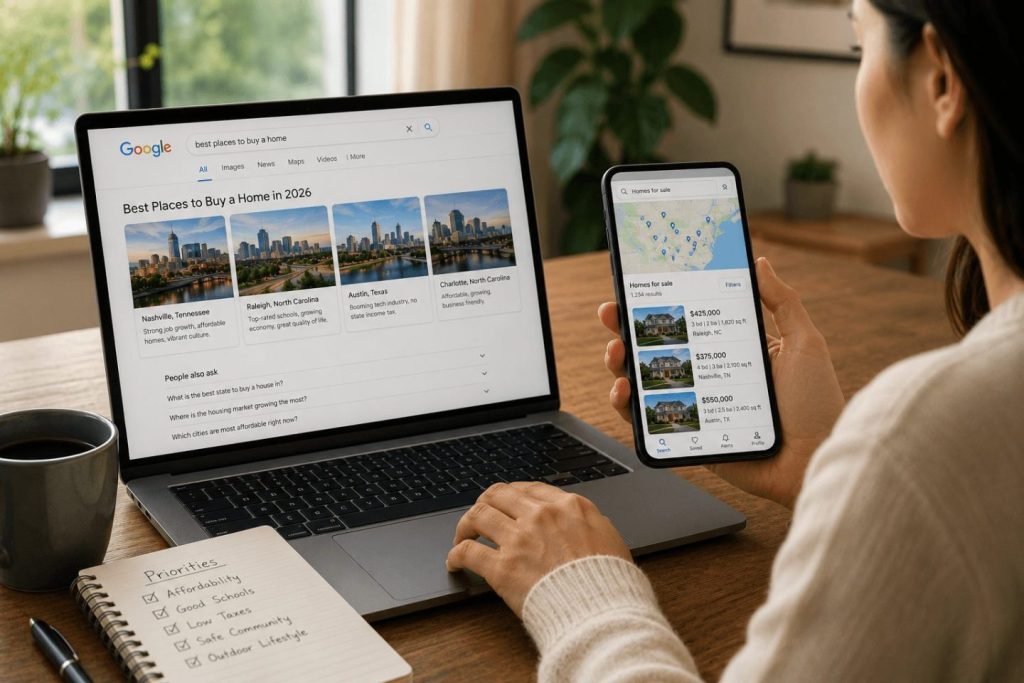
Search engines have also contributed to this shift. Instead of visiting one local real estate website, buyers now begin with broad searches such as:
- Best states to retire
- Most affordable places to buy a home
- Homes for sale with acreage
- Best places to live for remote workers
- States with no income tax
- Fastest-growing housing markets
These searches introduce buyers to markets they may never have previously considered. As they continue researching, they discover communities, neighborhoods, and listings across multiple states. What begins as a simple Google search often evolves into a nationwide home search.
This is one reason why online listing visibility has become so important. Buyers aren’t just searching locally anymore, they’re searching everywhere.
Relocation Buyers Expect More From Real Estate Professionals

As buyers expand their search, they also expect more guidance from agents. They want professionals who understand relocation. They want local market expertise combined with a broader understanding of regional trends.
Many buyers are unfamiliar with the communities they’re considering, so they rely heavily on agents to explain differences in taxes, insurance, schools, local regulations, amenities, and market conditions. Agents who provide educational content, neighborhood guides, relocation resources, and detailed market insights often build trust long before the first conversation takes place.
In today’s market, being a knowledgeable local expert is still essential, but being able to help buyers compare markets has become an increasingly valuable skill.
Why This Trend Matters for Real Estate Agents

The shift toward statewide home searches creates new opportunities for agents and brokers. Instead of focusing solely on buyers within driving distance, many professionals are finding success by marketing to relocation buyers and out-of-state consumers. This requires a different marketing strategy. Local SEO becomes more important.
- Educational blog content attracts buyers researching unfamiliar markets.
- Google Business Profiles help establish credibility.
- Virtual tours allow distant buyers to explore properties.
- Broad listing exposure ensures homes appear wherever buyers are searching.
The agents who embrace digital marketing and expand their online visibility are often the ones best positioned to capture these interstate buyers.
Nationwide Listing Exposure Is Becoming More Valuable

As buyers search across multiple states, listing visibility becomes increasingly important. A property can no longer rely solely on local exposure. It needs to appear where buyers are actively looking, whether they’re in the next county or across the country. That’s why listing syndication, search engine visibility, and broad online distribution have become such valuable components of modern real estate marketing.
Platforms like MyState MLS help support this broader approach by giving agents the ability to market eligible listings through a wide network of consumer-facing real estate websites. For professionals working with relocation clients, multi-state buyers, or specialized property types, expanded visibility can help connect listings with qualified buyers regardless of where they begin their search.
The broader the audience, the greater the opportunity to generate interest, inquiries, and offers.
The Home Search Will Continue to Expand
Consumer behavior continues to evolve, and there’s little indication that buyers will return to searching only within a few neighborhoods.
Technology has made researching distant markets simple. Remote work has expanded where people can live. Affordability continues to influence relocation decisions. Buyers have more information than ever before, giving them the confidence to consider opportunities across entire regions of the country.
For real estate professionals, this means thinking beyond traditional marketing strategies. Success increasingly depends on reaching buyers wherever they are, not just where your listing is located.
The future of real estate belongs to professionals who recognize that today’s buyer isn’t confined to a single neighborhood. They’re exploring cities, comparing regions, and in many cases, shopping entire states before deciding where to call home.
