
Homebuyers Are No Longer Looking at Homes the Same Way
Not long ago, buying a home was largely an emotional decision. Buyers would walk into a property and immediately begin imagining where their furniture would go, how they would decorate the kitchen, or whether the backyard was big enough for family gatherings. While those factors still matter, something significant has changed over the past few years.
Today’s homebuyers are approaching the process differently. Before they ever schedule a showing, most of them have already researched everything from neighborhood appreciation rates, to analyzed local inventory levels, studied school district rankings, and even reviewed future development plans for the surrounding area. Some have compared multiple cities, counties, or even states before narrowing their search.
In many ways, the average buyer in 2026 is beginning to think more like a real estate investor than a traditional homeowner.
This shift is changing the way homes are marketed, how agents communicate value, and what buyers expect from the professionals representing them. Understanding this trend is becoming increasingly important for agents and brokers who want to stay ahead of changing consumer behavior.
The Housing Market Created a More Educated Buyer

One of the biggest reasons for this shift is simple: consumers have witnessed firsthand how real estate can impact wealth.
Over the past decade, many homeowners watched their properties appreciate dramatically. Friends and family members who purchased homes before major price increases often accumulated substantial equity, sometimes in just a few years. Stories of homeowners gaining six figures in value became common across many parts of the country.
At the same time, buyers experienced the challenges that came with rising mortgage rates, increasing insurance costs, and fluctuating inventory levels. Real estate became more than a place to live. It became one of the most discussed financial topics in America.
As a result, buyers began paying closer attention.
They started asking questions that previous generations rarely considered during the early stages of the home search. Instead of simply asking whether a home fit their lifestyle, they began evaluating whether the property represented a smart financial decision. They wanted to understand future resale potential, long-term appreciation prospects, and the economic health of the surrounding market.
The modern buyer is still searching for a home, but they’re also evaluating an investment.
Information Has Never Been Easier to Find
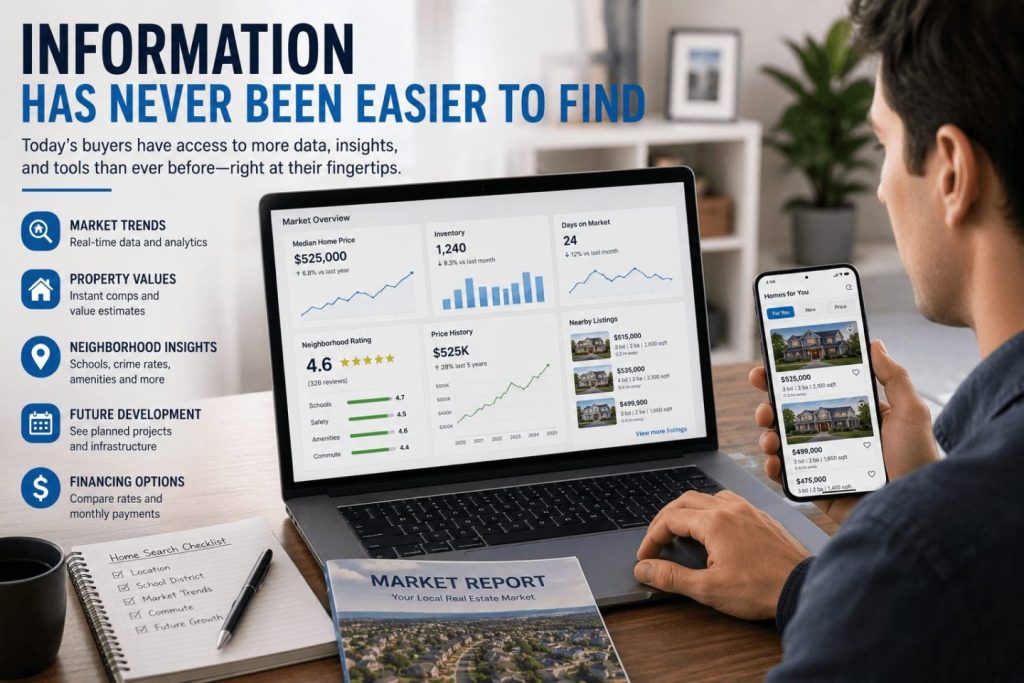
Technology has accelerated this transformation.
A generation ago, buyers relied heavily on agents to access information about properties and neighborhoods. Today, consumers can gather enormous amounts of information on their own before ever speaking with a real estate professional.
Market reports, housing trends, property histories, local tax information, all the school rankings, crime statistics, demographic changes, and local economic data are all available with a few clicks. Artificial intelligence has made researching these topics even easier by helping consumers organize information and identify patterns they may have overlooked.
This abundance of information has created a buyer who enters the transaction with far more knowledge than previous generations.
Many agents have experienced situations where buyers arrive at a showing already familiar with comparable sales, recent price reductions, inventory trends, and even future development projects planned for the area. Some buyers have spent weeks researching before ever setting foot inside a property.
The result is a consumer who approaches the process with a much more analytical mindset.
Affordability Has Raised the Stakes

The affordability challenges facing today’s housing market have also played a major role in changing buyer behavior.
When mortgage rates were much lower and monthly payments were more manageable, consumers had much more flexibility in their decision-making. And even though no home purchase has ever been casual, many buyers felt comfortable prioritizing lifestyle preferences over long-term financial considerations. That environment has changed, and quickly.
In the past few years, purchasing a home has become by-far one of the largest financial commitments a consumer will ever make. Buyers know this more today than they ever have before. They understand that mistakes can be expensive, and that awareness has made them more cautious and more strategic.
Rather than focusing solely on granite countertops or open floor plans, many buyers are evaluating how a property might perform over the next five, ten, or even twenty years. They want reassurance that the neighborhood will remain desirable, that the demand for not only their home but, the area in general will continue to exist, and that future buyers will still find the property attractive when it eventually returns to the market.
Those are classic investor questions, and they are becoming increasingly common among ordinary homebuyers.
Remote Work Has Expanded the Playing Field
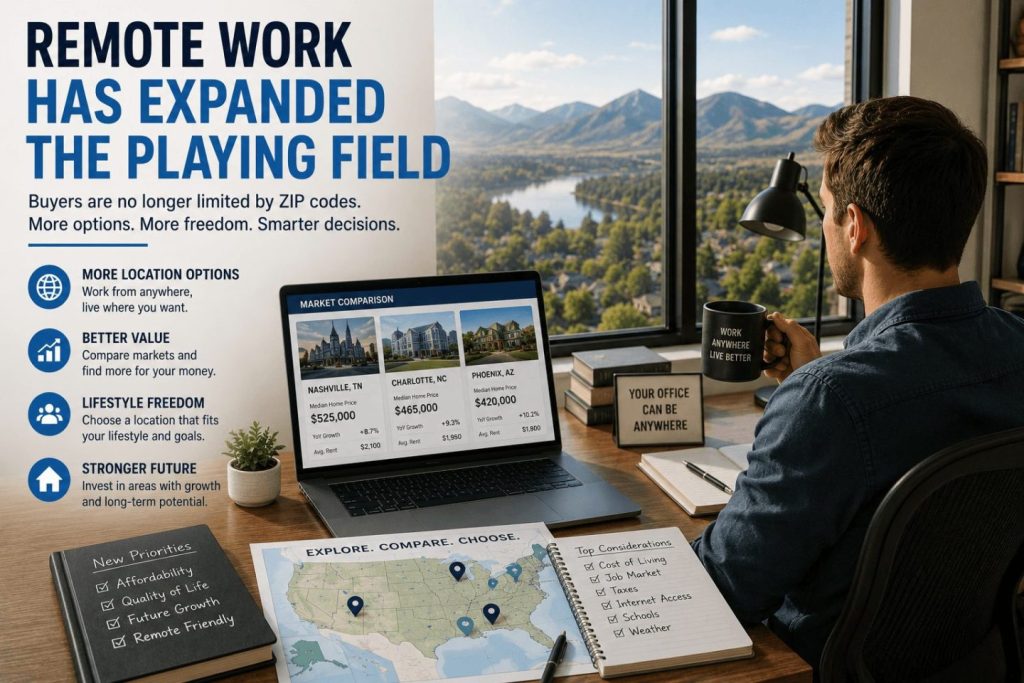
Another factor contributing to this trend is the continued growth of remote and hybrid work arrangements.
For decades, employment location dictated where many people could and should live. Buyers often focused their search within a relatively small radius of their workplace because more often than not, they were driving to work. Today, millions of businesses enjoy greater flexibility and that translates to where their employees choose to reside.
That flexibility has dramatically expanded the number of options available to consumers.
Instead of comparing neighborhoods within a single city, buyers may compare entirely different regions of the country. A family in New Jersey might consider Florida, Tennessee, and Texas. A remote worker in California may evaluate opportunities in Arizona, Idaho, or North Carolina.
With so many options available, buyers naturally begin comparing markets the same way investors compare opportunities. They evaluate taxes, affordability, job growth, infrastructure projects, population trends, and future development plans.
The search becomes less about finding a home and more about identifying the best overall opportunity.
The Rise of the Hybrid Buyer

Perhaps the most interesting development is the emergence of what many agents are beginning to recognize as the hybrid buyer.
These consumers do not view themselves as investors, yet they frequently think like them.
They still care deeply about lifestyle factors. They want great schools, safe neighborhoods, convenient amenities, and homes that fit their families’ needs. But they also want strong appreciation potential. They want flexibility. They want the ability to rent the property if circumstances change. They want options.
In other words, they want a home that satisfies both emotional and financial objectives.
This hybrid mindset is becoming increasingly common among first-time buyers, move-up buyers, retirees, and even luxury consumers. Regardless of price point, today’s buyers are blending lifestyle decisions with investment considerations in ways that were far less common just a few years ago.
