
Every real estate professional experiences this type of thing at some point. The phone gets quieter, showing requests slow down, new leads stop appearing as frequently as they once did, old leads dry up. And just like that, the pipeline that felt full just weeks ago starts to feel more uncertain than it has in quite some time.
Ask any sales person, in any industry, and you’ll likely here similar responses: When your pipeline slows down, it can create stress, doubt, and second guessing. Many agents immediately assume the market is to blame. Others think they need to spend more money on advertising or switch brokerages. In reality, a slow pipeline is rarely caused by a single factor. More often, it is the result of small gaps in daily activity, follow up habits, or lead generation routines that went unnoticed during busier times.
The good news: a slow pipeline doesn’t have to be a permanent thing. It can be and is more often is a signal of your business telling you to pause, then adjust, refocus, and rebuild the momentum you enjoy riding high on. Agents who respond quickly, with intentionally moreso than an emotional reaction, almost always recover faster than those who wait for the market to change.
Today, we’ll outline exactly what to do when your pipeline slows down, using practical steps that can (and probably should) be implemented immediately. Our strategies are designed to help real estate agents in every corner of the county stabilize their business, create new opportunities, and regain confidence in their production (basically what top agents practice almost intinctually).
Step One: Diagnose the Real Problem Before Taking Action

The first reaction to a slow pipeline is often to panic. Agents start changing everything at once. They buy new marketing tools, switch CRM systems, redesign their website, or blame external factors. We always recommend to our members not to take that road, it usually leads no where you want to be, as they can waste time and money if the underlying issue is not identified.
Instead, begin with a simple diagnosis.
Look at your pipeline from the past ninety days and ask yourself a few honest questions. How many new conversations did you start each week? How many follow ups did you complete? How many listing presentations did you schedule? How many contacts turned into signed agreements?
Most pipeline slowdowns are not caused by a lack of leads. They are caused by a lack of consistent activity. When daily habits drift, results follow shortly after.
Take a moment to calculate your numbers. Count your calls, emails, texts, and meetings. Identify the exact point where the activity dropped. That insight will guide every decision you make next.
Step Two: Reconnect With the People You Already Know

When business starts to slow down, many agents immediately look for new leads (sometimes they even pay unreal prices from sources like Zillow and just end up with leads called by a handful of other agents). They start searching for fresh prospects, new advertising channels, or unfamiliar marketing tactics. While new leads are important, the fastest opportunities usually come from people you already know.
Your existing database is more often your most valuable asset.
Past clients, current contacts, and local relationships represent warm opportunities that require less effort to convert. These individuals already recognize your name and understand your role in the market. Reaching out to them is not cold prospecting. It is relationship maintenance.
Start by reviewing your contact list and identifying people you have not spoken to recently. Reach out with a genuine message. Ask how they are doing. Offer an update on the local market. Provide useful information rather than a sales pitch.
These conversations frequently lead to referrals, repeat business, or new listings. More importantly, they rebuild confidence and create immediate activity in your pipeline.
Step Three: Increase Conversations, Not Marketing Expenses

One of the most common mistakes agents make during slow periods is increasing their marketing budget without increasing their daily conversations. Advertising can generate awareness, but conversations generate clients.
Instead of spending more money, focus on increasing communication.
Set a daily target for meaningful interactions. This could include phone calls, text messages, emails, or in person meetings. The format matters less than the consistency. When conversations increase, opportunities follow.
Think of your pipeline as a simple equation. More conversations create more appointments. More appointments create more listings. More listings create more closings. More conversations mean more opportunities.
Step Four: Revisit Expired and Withdrawn Listings

One of the most reliable sources of new business during slow periods is the group of properties that recently failed to sell. Expired and withdrawn listings represent motivated sellers who have already attempted to move forward.
These homeowners are not casual prospects. They are individuals who made a decision to sell but did not achieve the desired result. That situation often creates frustration and urgency.
Review recent expired listings in your market and study each property carefully. Look at the pricing, marketing approach, and listing history. Identify potential improvements you could offer.
When you reach out, focus on solutions rather than criticism. Offer a fresh perspective. Share ideas that could help the property succeed in the current market. Agents who consistently work with expired listings often find that slow periods turn into productive ones very quickly.
Step Five: Strengthen Your Follow Up System

A slow pipeline is often the result of weak follow up, not weak lead generation. Many prospects express interest but never hear from the agent again after the initial conversation.
Follow up is where most deals are won or lost.
Create a structured system for staying in contact with prospects. Schedule reminders for future calls. Send periodic updates about market trends. Share relevant information that keeps you visible and helpful.
Consistency is more important than creativity. A simple message delivered at the right time can make the difference between losing a lead and securing a client.
Remember that real estate decisions rarely happen immediately. Buyers and sellers often take weeks or months to move forward. Agents who maintain consistent communication remain top of mind when the decision is finally made.
Step Six: Refresh Your Daily Routine

Business momentum is closely tied to daily habits. When routines become inconsistent, results begin to fluctuate. A slow pipeline is often a sign that structure has slipped.
Take time to rebuild a predictable schedule.
Start your day with lead generation activities before checking email or social media. Block time for follow up conversations. Reserve specific hours for appointments and marketing tasks. Protect these time blocks as if they were meetings with clients.
Routine creates stability. Stability creates momentum. Momentum fills the pipeline. Even small adjustments can produce noticeable improvements in productivity.
Step Seven: Evaluate Your Marketing Message

Sometimes the pipeline slows because your message no longer resonates with your audience. Market conditions change. Consumer expectations evolve. What worked last year may not work today.
Review your marketing materials and ask yourself whether they address current concerns. Are you speaking directly to the needs of buyers and sellers in your area? Are you providing useful insights about pricing, inventory, or timing?
Effective marketing is not about volume. It is about relevance.
Consider updating your messaging to reflect current market realities. Share practical advice that demonstrates your expertise. Focus on solving problems rather than promoting yourself.
When your message aligns with what clients are experiencing, engagement naturally increases.
Step Eight: Track Your Activity Every Week
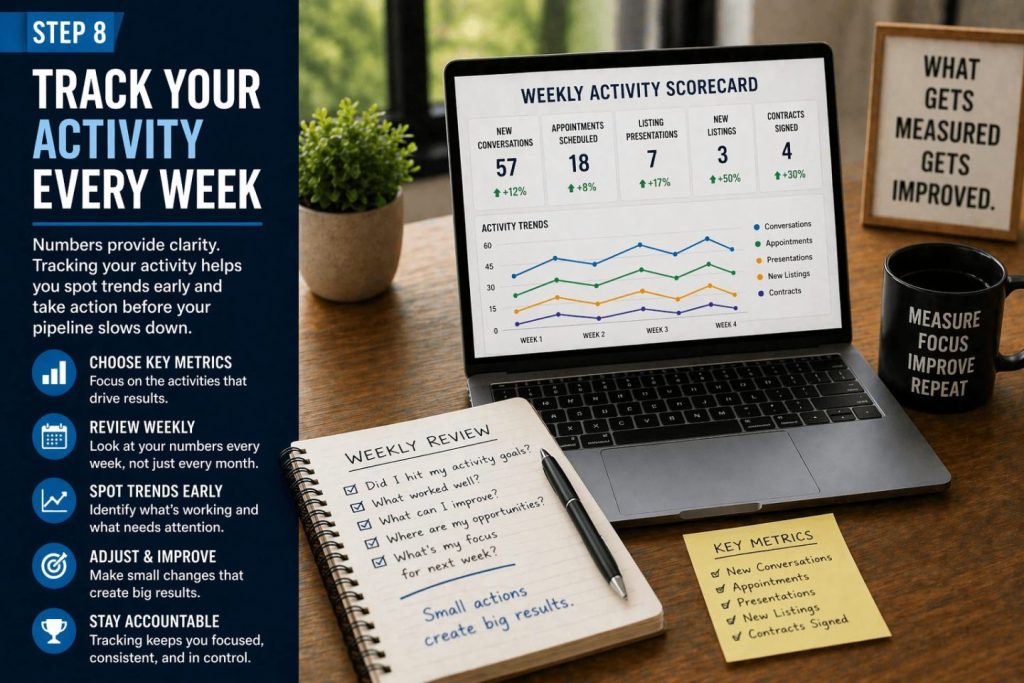
One of the simplest ways to prevent future slowdowns is to monitor your activity consistently. Tracking your numbers allows you to identify trends before they become problems.
Choose a few key metrics and review them weekly. These might include the number of conversations you started, appointments scheduled, listing presentations delivered, and contracts signed.
When activity begins to decline, you will notice the change immediately and can respond before the pipeline becomes empty. This proactive approach keeps your business stable even during unpredictable market conditions.
The Real Lesson Behind a Slow Pipeline
A slow pipeline is not a failure. It is feedback. It reveals where attention is needed. It highlights areas that require adjustment. Most importantly, it provides an opportunity to strengthen your business foundation.
Every successful agent has experienced slow periods. The difference between those who struggle and those who recover quickly is not talent or luck.
Agents who take action early regain momentum faster. They rebuild relationships, increase conversations, and maintain consistent routines. Over time, those habits create a steady flow of opportunities regardless of market conditions.
Plain and Simple – A Final Word
When your pipeline slows down, the solution is rarely dramatic. It does not require reinventing your business or waiting for the market to improve. It requires returning to the fundamentals that drive consistent production.
Reconnect with your contacts. Increase your conversations. Strengthen your follow up. Refresh your routine. Track your activity.
These steps may seem simple, but they are powerful. They restore momentum, rebuild confidence, and create new opportunities. And most importantly, they remind you that your pipeline is not controlled by the market.
It is controlled by your daily actions.
