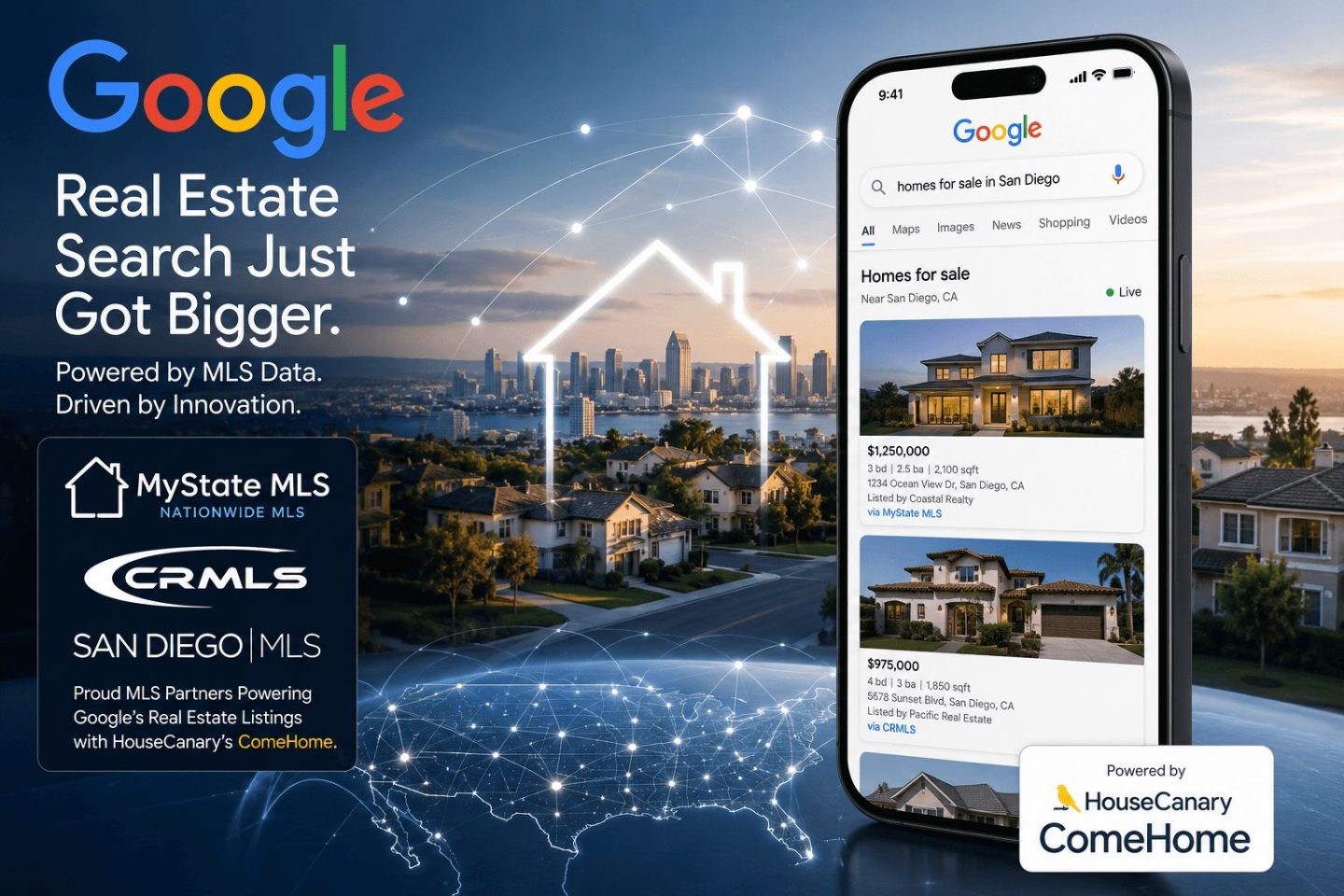
For years, homebuyers have started their real estate journey with Google. They searched for neighborhoods, school districts, mortgage rates, real estate agents, and local market trends. Eventually, many of those buyers found themselves on Zillow, Realtor.com, Redfin, Homes.com, or another real estate portal. That process may be changing.
Google has officially expanded its real estate listings initiative, allowing home listings to appear directly within Google mobile search results across all 50 states through a partnership with HouseCanary and its ComeHome platform. What started as a limited pilot is now becoming one of the most significant shifts in online real estate visibility in years.
For real estate professionals, this development raises an important question: What happens when buyers no longer need to leave Google to find homes for sale? The answer could reshape listing exposure, lead generation, and the role MLSs play in property distribution.
The Return of Google Real Estate Search

Google has experimented with real estate listings before. Previous attempts never gained enough traction to seriously challenge established portals. This time feels different.
Instead of building a real estate platform from scratch, Google partnered with HouseCanary and its ComeHome marketplace, which aggregates MLS listing data and provides the infrastructure necessary to display listings directly within search results.
The result is a streamlined experience where buyers searching for homes in certain markets can see active listings directly on Google, complete with photos, property information, and agent contact options. The listings appear prominently in mobile search results, putting properties in front of consumers at the exact moment they’re actively searching.
For buyers, it’s a more convenient experience. For agents and brokers, it could represent a major new source of exposure.
The MLSs Helping Power Google’s Listings Program
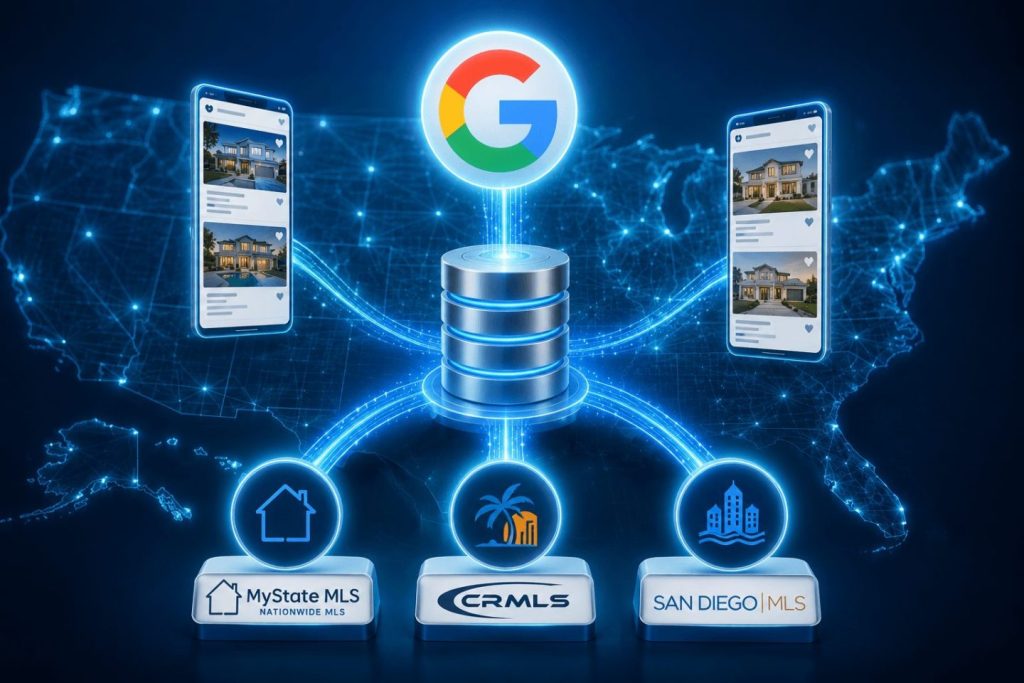
One of the most overlooked parts of this story is where Google is actually getting its listing data. Unlike many real estate portals that gather information from a variety of sources, Google’s current initiative relies on MLS-provided data through HouseCanary’s ComeHome platform.
According to HouseCanary and multiple industry reports, three MLS organizations have been among the primary listing providers supporting the initiative:
- MyState MLS
- California Regional MLS (CRMLS)
- San Diego MLS
Industry reporting identified these three MLSs as the active MLS participants helping provide listing inventory to Google’s pilot program through HouseCanary’s infrastructure.
That puts MyState MLS in a unique position.
While many MLSs are still evaluating how they want listing distribution to evolve, MyState MLS was already participating in the infrastructure that helped make Google’s real estate search expansion possible.
Why MyState MLS Matters in This Conversation

The significance of MyState MLS extends beyond simply supplying listings.
Because MyState MLS operates as a nationwide MLS, it brings a unique inventory source that differs from traditional regional MLS organizations. Agents can list properties from across the country through a single platform, creating broader opportunities for exposure and distribution.
When HouseCanary and Google needed MLS inventory for their growing initiative, MyState MLS was already positioned to contribute listings through the ComeHome ecosystem. HouseCanary’s own program materials specifically identify MyState MLS as a participating MLS and even note that agents seeking immediate participation can access the program through MyState MLS.
That means MyState MLS wasn’t simply observing this evolution. It was helping make it possible.
Why Google’s Entry Matters More Than Another Real Estate Portal

The real story isn’t that Google is displaying homes. The real story is that Google controls the largest source of online consumer traffic in the world.
Every day, billions of searches occur on Google. Many of those searches involve housing-related questions and local market research. By inserting listings directly into search results, Google is reducing the number of clicks consumers need to make before discovering available properties.
Historically, portals acted as the bridge between buyers and listings. Google is now positioning itself much closer to the listing itself.
That shift could have long-term implications for:
- Lead generation
- Consumer search behavior
- Listing visibility
- Portal competition
- MLS distribution strategies
In fact, investors immediately recognized the significance of the announcement, with shares of major real estate portal companies declining following Google’s nationwide rollout announcement.
What This Means for Agents

For agents, the opportunity is relatively straightforward. More exposure generally creates more opportunities for inquiries. When listings appear directly within Google search results, agents may gain visibility in front of buyers who never visit traditional real estate websites.
Even more importantly, Google’s implementation includes agent attribution and contact options, helping consumers connect directly with listing professionals. HouseCanary’s program specifically highlights broker and agent attribution as a core component of the initiative.
For years, agents have competed for visibility on crowded portals. Now they may have another avenue to reach consumers where the search journey often begins.
What This Means for Brokers

Brokerages should be paying close attention. The industry has spent years debating listing ownership, listing control, and listing distribution.
Google’s partnership with MLS data providers creates a scenario where MLS participation becomes increasingly valuable. Rather than relying solely on third-party portals, brokers may gain another direct path to consumer visibility through trusted MLS data feeds.
The key takeaway is simple: The broker that controls the listing controls the opportunity for exposure. As more distribution channels emerge, listing ownership becomes even more valuable.
A Bigger Trend Is Emerging
Google’s real estate initiative is part of a larger trend happening across the industry. Listing distribution is becoming more decentralized. The days when a handful of websites controlled most consumer discovery may be fading.
Instead, listings are beginning to appear across multiple ecosystems:
- Traditional portals
- MLS public websites
- Brokerage websites
- AI-powered search experiences
- Google search results
- Specialized property marketplaces
The common denominator in nearly every case is accurate MLS data.
That’s why the role of MLS organizations may become even more important in the years ahead.
The Future of Home Search May Look Very Different
No one knows exactly how far Google intends to take this initiative. What we do know is that the company has already expanded the program nationwide and continues working with HouseCanary’s ComeHome platform to power listing visibility. If consumers embrace the experience, Google could become one of the largest real estate discovery platforms in the country almost overnight.
For agents and brokers, that possibility makes one thing clear: Visibility matters more than ever.
And the MLSs helping power these new distribution channels are likely to play a significant role in determining who gets seen first.
Among those organizations, MyState MLS stands out as one of the early participants helping bring MLS-powered listings directly into Google’s search ecosystem alongside CRMLS and San Diego MLS. As Google’s real estate initiative continues to evolve, that early involvement may prove to be one of the most important competitive advantages available to agents seeking broader listing exposure.
