
For real estate professionals, continuing education (CE) is more than just a box to check for license renewal. Sure, state regulators require it, and every agent or broker has to complete a certain number of CE hours. But the truth is, not all courses are created equal. Some classes offer little more than the basics, just enough to get you the credits. Others can completely shift the trajectory of your business, helping you close more deals, specialize in a niche, and build long-term success.
The question most agents ask themselves is: Which courses are actually worth taking?
In this article, we’ll unpack how to evaluate CE opportunities, highlight the most valuable courses for real estate professionals, and give you a roadmap for turning “mandatory” education into a growth engine for your career.
Why Continuing Education Matters Beyond License Renewal
Let’s start here: you’re going to have to take CE anyway. Every state requires agents and brokers to complete hours of continuing education to renew their license. That means you can either:
- Rush through the cheapest, quickest online class just to get the certificate, or
- Be strategic and choose courses that give you a competitive edge.
The best real estate professionals treat CE as an investment in their skills and reputation. It’s not just about compliance, it’s about staying sharper than the next agent or broker in an industry that changes more often than you might think. Think about all the shifts happening right now:
- New laws and court rulings around commission transparency.
- Technology (like AI) reshaping how listings are shown, syndicated and marketed.
- Expanding niches such as manufactured housing, build-to-rent communities, and commercial leasing.
- Environmental factors like zoning updates, insurance changes, and climate risk mapping.
If you’re not learning, you’re falling behind. Continuing education ensures you’re not just surviving the industry changes, you’re thriving through them.
How to Evaluate Which CE Courses Are Worth Your Time

When you’re browsing through CE company classes, it’s pretty easy to get overwhelmed. Titles can sound similar, and it’s not always clear which ones have or add legitimate value to your repituar. Here’s a simple framework for evaluating a course:
Relevance to Your Business Goals: Ask yourself: Will this help me attract more clients, close more deals, or specialize in something profitable? If the answer is no, it might not be worth it.
Depth of Practical Knowledge: The best courses don’t just regurgitate laws and regulations; they give you solid strategies, examples, and case studies you can apply in the real world.
Instructor Credibility: Look at who’s teaching. Is it an experienced broker, attorney, or specialist in a niche often offers more value than a generic online module.
Networking Opportunities: In-person or live virtual CE courses often connect you with other professionals. The relationships you build can sometimes be more valuable than the class itself.
Potential For Future-Proofing: Does the course prepare you for where the market is headed, not just where it’s been? Courses on technology, investment strategies, and emerging niches usually hold long-term value.
CE Courses That Are Actually Worth Taking
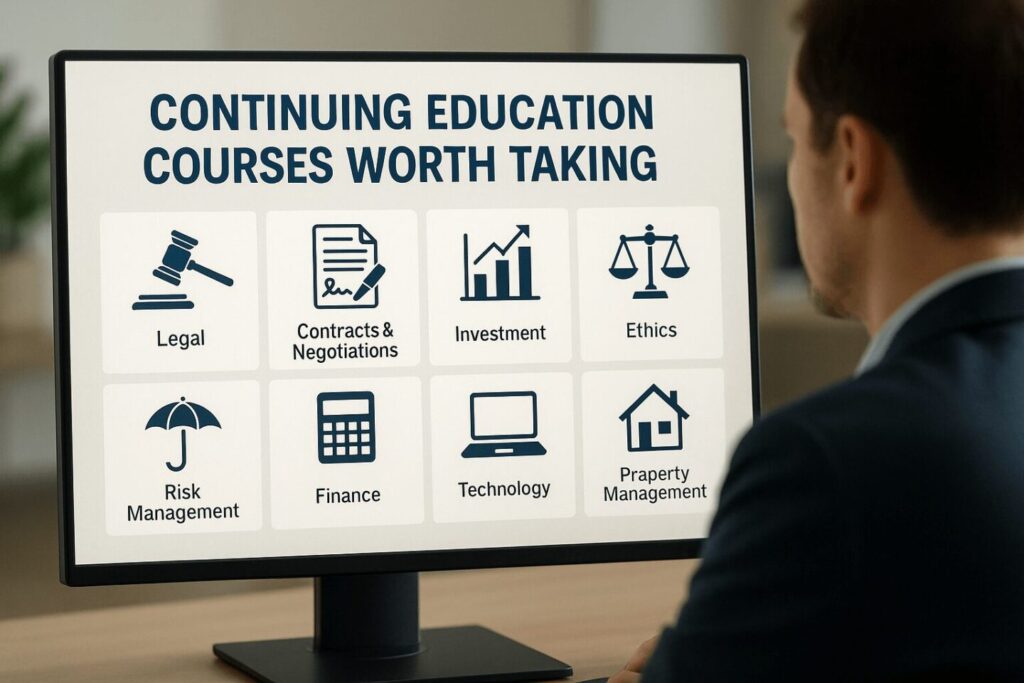
Now let’s get specific. These are the types of continuing education courses that consistently deliver the most bang for your buck.
Legal & Ethics Updates: Laws, disclosure rules, and ethical standards are constantly evolving. With the ongoing commission lawsuits and changes to MLS rules, this category isn’t optional, it’s survival. Courses that break down new legal rulings or NAR updates are critical if you want to protect yourself and your clients.
Contracts and Negotiation: Contracts are essentially the lifeblood of real estate, and yet many agents don’t truly understand them beyond filling in blanks. Courses on contract law, contingencies, and negotiation tactics can directly save (or make) you thousands of dollars. If you want to stand out, be the agent who can explain contract clauses in plain English to nervous buyers and sellers.
Investment Property Analysis: More and more clients are looking at real estate as an investment. Courses that teach you how to calculate ROI, cap rates, and cash flow analysis can open doors to investor clients. Investors buy repeatedly, unlike residential clients who may only move every 7-10 years.
Commercial Real Estate Basics: Residential agents often think commercial real estate is out of reach, but CE courses can give you the foundation to break in without starting over. Understanding leases, zoning, and commercial property valuation can diversify your income and help you work with small business owners or investors.
Property Management and Leasing: Property management may not be glamorous, but it provides steady, recurring income. Courses in this area teach landlord-tenant law, leasing agreements, and best practices for maintaining rental properties. Even if you don’t want to manage properties, the knowledge helps you advise investor clients.
Technology and Marketing in Real Estate: Real estate marketing has changed dramatically in the past five years. If you’re not keeping up with digital ads, social media, SEO, and AI-driven tools, you risk becoming invisible to prospects. Courses that cover online lead generation, 3D tours, or virtual showings give you skills that clients actually notice.
Niche Specializations: “The riches are in the niches,” as they say. CE courses in luxury real estate, senior housing, manufactured homes, or green building certifications can make you the go-to agent in a specialty. When you specialize, referrals and trust come faster.
Fair Housing and Diversity Training: This isn’t just about compliance, it’s about professionalism. Understanding how to avoid discrimination, serve diverse markets, and create inclusive client experiences isn’t optional. It also protects you legally and ethically.
Finance and Mortgage Updates: Financing rules change pretty regularly, and understanding loan products, down payment assistance programs, and credit requirements makes you an asset to buyers. Courses on mortgages or financing strategies help you answer client questions with confidence.
Risk Management: Every real estate agent knows one mistake in disclosures, contracts, or communication can end in a lawsuit. CE courses on risk management teach you how to avoid liability and protect yourself. Think of it as insurance through knowledge.
Online vs. In-Person CE: Which Is Better?

Both have their place.
- Online CE: Convenient, affordable, and flexible. Great for required credits.
- In-Person CE: Often better for networking, discussion, mentorship. You can ask real-time questions and often gain insights you won’t get from a video lecture.
A smart approach is to knock out the “mandatory but boring” courses online and save your time and money for in-person sessions that could open doors to new clients or collaborations.
How to Maximize the Value of CE
It’s not enough to just attend a CE class, you need to implement what you learn. Here’s how to make sure your courses translate into real business growth:
- Take notes with application in mind. Write down how you’ll use the information in your next transaction.
- Update your marketing. If you complete a niche course, add it to your bio, business cards, and website.
- Share your knowledge. Post about your new certification or insights on LinkedIn or Instagram. Clients love to see their agent investing in growth.
- Stay consistent. Don’t just cram courses before renewal. Spread them out to stay fresh year-round.
Courses That May Not Be Worth It
Not all courses are created equally. Some common challenges we’ve heard of include (but are not limited to):
- Generic electives that rehash basic topics you already know.
- Outdated marketing courses that don’t address modern digital strategies.
- Ultra-niche certifications that have no relevance in your market. (For example, a coastal waterfront property certification won’t help much if you’re in Kansas.)
If a course doesn’t tie to your client base, market trends, or long-term goals, it may be best to pass.
Final Thoughts
Continuing education in real estate doesn’t have to be a chore. With the right strategy, you can turn CE into a business-building tool that keeps you ahead of the curve. Try to find CE courses that:
- Align with your goals.
- Teach practical, applicable skills.
- Prepare you for the future of real estate.
So the next time you’re scrolling through all the different CE options real estate schools have to offer, don’t ask, “Which one is easiest?” Instead ask, “Which one will help me grow?” Because in real estate, growth-minded agents aren’t just checking boxes, they’re building more successful careers than most.
